13x6 Minilites on a Mk2 Escort: The No-Arch-Work Fitment Playbook
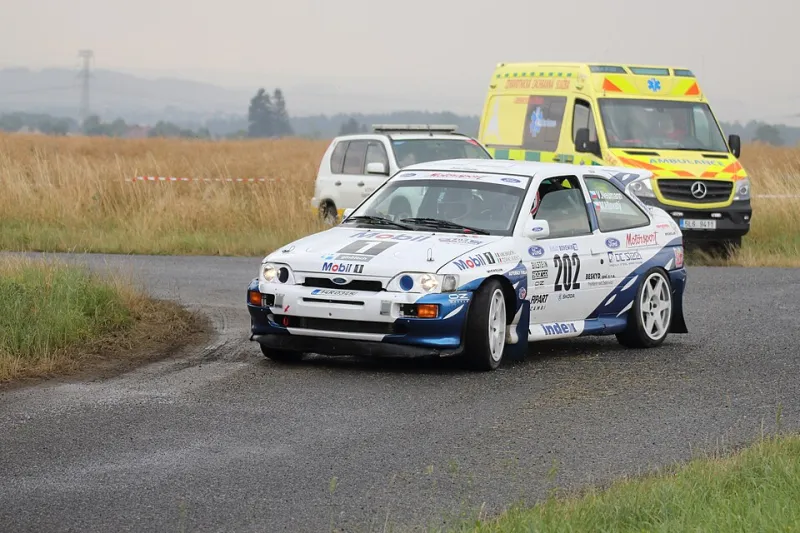
Photo: Darren Garlick, CC0, via Wikimedia Commons
Fitting a set of 13x6 Minilites to a Ford Escort Mk2 ought to be one of the simple pleasures of classic Ford ownership. In practice, it is where a lot of owners discover that 'standard arches' can mean three different things depending on who repaired them, what tyres are on the shelf and how low the car sits. The good news is that a no-arch-work fit is achievable on many Mk2 Escorts. The bad news is that it is not a case of ordering the first 13x6 set you see and hoping for the best.
This guide is about stacking the odds in your favour: measuring the car you actually have, choosing an offset and tyre size that work together, and checking the spots where Mk2 Escorts usually rub before you commit to costly arch work.
Begin with the arch, not the wheel
Before you look at offsets, put the car on flat ground and inspect the arches. Mk2 Escorts are now old enough that many have had replacement wings, lip repairs, underseal touch-ups and a hard life. A wing that has been pulled out by a few millimetres may give you clearance that the other side does not have. A car that has been repaired more tightly than factory can rub with a wheel that 'everyone knows fits'.
Measure from the hub face to the arch lip on both sides, front and rear. A plumb line and a steel rule are enough. Do it with the car at normal ride height and with the suspension settled. Note any difference side to side. A 5 mm variation is common and can be the difference between a comfortable fit and a tyre that kisses the lip on full lock.
Also look behind the arch lip. The inner tub, the seam sealer and any underseal can eat clearance. If the car has been rebuilt, check that the axle is centred and that the front struts are not bent. A fitment problem is sometimes an alignment problem in disguise.
Offset: the number that decides everything
A 13x6 Minilite is not a single fitment. The offset, usually marked as ET, decides how much of the wheel sits inboard versus outboard. The lower the ET number, the further the wheel sits towards the arch lip. That can look great, but it is also how owners end up with a tyre rubbing on the rear arch on a bumpy B-road.
For a Mk2 Escort on standard arches, ET20 is a sensible starting point. Many off-the-shelf 13x6 Minilites for rear-wheel-drive Fords sit in the ET15 to ET20 region. ET15 can work, especially with a 175/70R13 tyre and standard ride height, but it is tight at the rear lip and at the front arch. It is not a fitment to buy blind.
Check the stamp on the wheel rather than trusting the listing. Minilite patterns have been made in different widths and offsets over the years, and a set that has been refurbished may have lost its markings. If you are buying second-hand, ask for the offset and measure it yourself if you can. A wheel that sits 5 mm further out than expected is enough to turn a no-arch-work plan into a rolling session.
Tyre choice changes the fit more than owners expect
The tyre is half the fitment. A 175/70R13 on a 13x6 Minilite is the classic period-friendly choice for a Mk2 Escort. It has a relatively tall sidewall, which helps ride quality on UK roads, but that sidewall also bulges. The bulge is what catches arch lips and inner tubs.
A 185/60R13 gives a shorter sidewall and often more clearance at the top of the arch, but it puts more rubber outboard and can be tighter against the strut and the inner wing. It also looks more modern. A 185/70R13 is usually too much for a standard-arch Mk2 unless the car is sitting high and the arches are generous.
Tyre brands are not all the same width, either. A '175' from one maker can measure closer to a 180 in the real world, and a aggressive sidewall design can add a few millimetres where you least want them. If you are close on clearance, fit the tyre you intend to run before you make a final judgement. Do not compare a bare wheel to a fully inflated tyre and assume the gap will stay the same.
Brake and suspension clearance
Minilites are popular because they clear many period brake setups, but you still need to check. On the front, look at the caliper-to-spoke clearance, the tie rod end and the strut tube. A 13-inch wheel can look fine from the outside and still have a balance weight catching the caliper. Stick-on weights on the inner barrel are a common culprit. Ask the tyre fitter to keep weights clear of the brake caliper and check again with the wheel fitted.
At the rear, check the wheel to inner tub, the wheel to leaf spring and the wheel to exhaust. Mk2 Escorts have a live axle, so lateral movement under load can close a gap that looks fine in the workshop. Jack the car up, check for play, and then load the boot with a passenger or two for a road test.
Suspension geometry matters as well. Lowering the front increases negative camber, which can help the top of the tyre clear the arch, but it also brings the inner sidewall closer to the strut. Lowering the rear changes the relationship between the tyre and the arch lip. If the car is significantly lowered, treat any published 'standard' fitment as a starting point only.
Where Mk2 Escorts usually rub
Up front, the common contact points are the arch lip at roughly ten and two o'clock, the inner wing on full lock, the strut tube and the anti-roll bar. A 13x6 with a 175/70 tyre can also catch the front valance or mudflap on lock if the car has been fitted with non-standard items.
At the rear, watch the arch lip, the inner tub and the exhaust. The rear lip is often the first place to complain because it is close to the tyre shoulder. If the car has been lowered and is running a wider tyre, a small bump with two people aboard can be enough to scrub. That is why a static workshop check is only half the job.
A realistic baseline
On a straight, unrepaired Mk2 Escort with standard arches, a 13x6 ET20 Minilite and a 175/70R13 tyre often gives around 6–8 mm at the rear lip and 8–10 mm to the front strut. That is workable, but it is not generous. If you are seeing 3–4 mm, do not call it done. If you are seeing less than 3 mm anywhere, plan for a different offset or tyre size rather than hoping the MOT tester will be kind.
These numbers are a guide, not a guarantee. The condition of the shell, the brand of tyre and the ride height all move the goalposts. The only number that matters is the one you measure on your own car.
Pre-purchase checklist
- Measure both front arches and both rear arches from hub face to lip. Write the numbers down.
- Confirm the wheel offset from the stamp, not the advert.
- Test-fit one front and one rear wheel before buying a full set of tyres.
- Check caliper-to-spoke clearance and keep balance weights away from the brakes.
- Turn the steering to full lock and check the inner wing, valance and mudflaps.
- Load the car with passengers or ballast and drive over a few speed humps before declaring victory.
- Check the rear axle for play and make sure the axle is centred.
- Tell your insurer about the wheel and tyre size change. It is a modification, even if it looks period-correct.
A Mk2 Escort on 13x6 Minilites is one of the great looks in British classic motoring, and it does not have to come with rolled arches. Measure carefully, choose the tyre and offset as a package, and leave yourself a margin. The best fitment is the one you never have to think about again.