The Awkward Truth About Wheel Theft: Hardening a Minilite Set Without Fooling Yourself
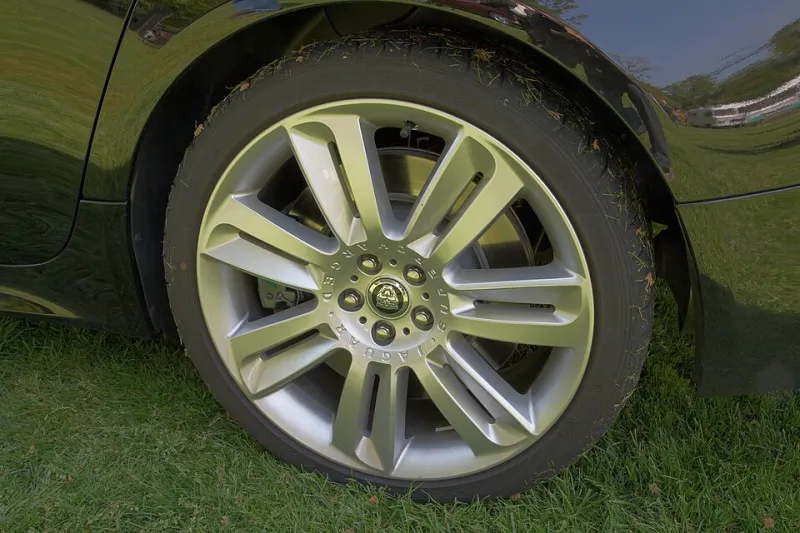
Photo: Magnus Bäck, Public domain, via Wikimedia Commons
There is no cheerful way to start this: a determined thief with time, tools and a quiet street can take almost anything. A set of Minilites is especially awkward because it is valuable, portable and fits a long list of classics. You are not going to make theft impossible. You can, however, make your wheels harder to identify as a soft target and much harder to sell on without awkward questions.
That is the sensible aim for 2026. Not a fortress. A routine.
Start with proof, not gadgets
Before you buy another lock, take photographs. Proper ones. Photograph each wheel off the car if you can, and on the car if you cannot. Capture the face, the inner barrel, the stampings, the centre badge, the valve area and any kerbing or repairs. Include a scale or a familiar object for size. Then photograph the set together and note where they live.
Why bother? Because insurance claims and police reports run on detail. “Four silver Minilites” is not a useful description. “Four 13x6 Minilite alloys, anthracite centres, polished rims, one scuff on the offside rear outer lip, stamped marks on the inner spokes” is. Keep the images in cloud storage and email a copy to yourself. A phone that goes missing with the car is no help.
Record the tyre brands, sizes and date codes too. If the wheels reappear on a forum or auction site, those details are often more distinctive than the wheel design itself.
Mark them in more than one way
Etching is the obvious move, and still a good one. A discreet postcode or a unique reference on the inner barrel can help identify a wheel if it is recovered. Do not put the full postcode on the outer face unless you enjoy giving strangers a map to your garage. Keep it subtle and keep a record of exactly what you stamped and where.
A visible etching can also act as a mild deterrent, but do not rely on it alone. Thieves know that stamped wheels can be painted over, machined or simply sold to someone who does not look closely. Use a second, covert mark as well: an ultraviolet pen in an unexpected place, or a small engraved code that only you know about. Photograph that mark clearly. A covert mark is only useful if you can prove it is yours.
Some owners use commercial property-marking systems. They can be worthwhile, especially if they register the mark in a database. The key is consistency: one reference number, recorded in one place, used on every wheel and quoted in your insurance file.
Locking nuts are a delay, not a force field
Locking wheel nuts are worth fitting. They raise the effort required and they make a casual thief move on. They are not magic. Most can be defeated by someone who knows what they are doing, and a lost key can turn a simple puncture repair into a miserable afternoon.
So treat locking nuts as one layer. Check the thread and seat are correct for your Minilites, fit them to the recommended torque and keep the key somewhere sensible but not in the glovebox. A key left in the car is an invitation. If you use two different locking systems, make sure you can still remove every wheel with the tools you carry. There is no point hardening the car so thoroughly that you cannot change a flat at the roadside.
Make storage boringly inconvenient
If you take the Minilites off for winter, do not stack them against the garage wall where they can be lifted over the door. Use a locked rack, chain them together, or store them somewhere that takes time to reach. Time and noise are the thief’s enemies.
If the car lives outside, think about where it is parked. A well-lit spot, a motion-sensitive light and a visible camera can all help, but the most useful thing is often a neighbour who knows your car. Join a local classic club or Neighbourhood Watch group. A strange van at 2am is easier to report when someone knows it should not be there.
Do not advertise a full set of Minilites on social media with your address, your daily routine or the exact dates you are away. It is dull advice because it is true.
Insurance is part of the kit
Agreed-value insurance is the grown-up answer to the replacement problem. A standard policy may pay out based on what a 1972 saloon on steel wheels is worth, not what a set of genuine Minilites costs to replace. Check the wording, declare the wheels and keep your photographs and receipts ready.
Ask specifically how the insurer treats wheels and tyres. Are they covered as part of the vehicle, or as accessories with a separate limit? What excess applies? Will they accept a club valuation? Get the answers before you need them.
If the worst happens
Report it to the police and get a crime reference number. Then contact your insurer. Do both quickly. After that, put the details where the classic community can see them: club forums, regional Facebook groups, autojumble noticeboards and specialist parts groups. Include the wheel size, finish, stampings, tyre details and any covert marks, but keep one identifying detail out of the public post so you can verify a claimant.
Set up saved searches on the usual marketplaces and check them for a few weeks. Thieves are not always clever; they are often just quick. A photograph and a crime reference make it much harder for a stolen set to be passed off as a bargain.
None of this guarantees anything. But a marked, photographed, locked and insured set is a worse target than an anonymous one. In the end, that is the realistic goal: not perfect security, just enough friction to make someone else’s wheels look easier.