What That Bang Left Behind: Auditing a Minilite After a Pothole
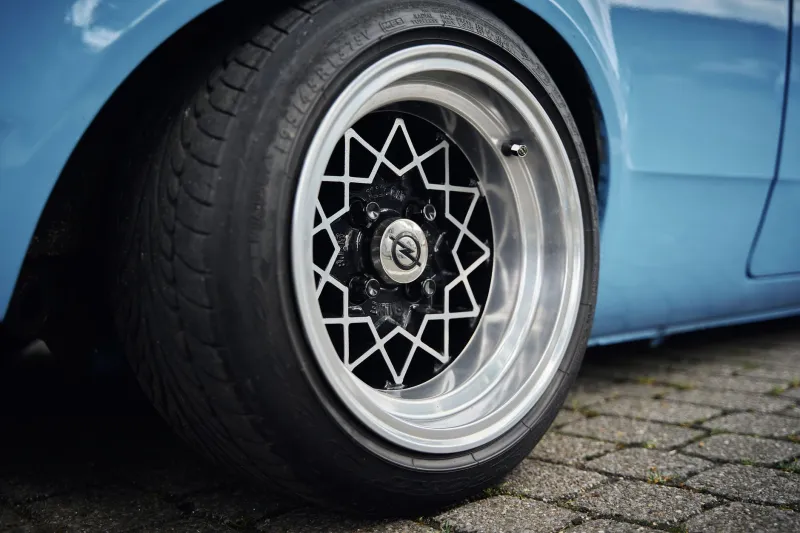
You know the noise. A wet November morning, a stretch of A-road you thought you knew, and then a bang that sends a shiver through the whole car. The tyre still looks inflated. The steering still tracks straight. So you carry on. That is exactly the moment when a Minilite deserves a closer look, because pothole damage is often quiet before it is expensive.
Minilite wheels have a well-earned reputation for taking punishment, but no alloy is immune to a sharp-edged crater at speed. The useful question is not whether the wheel survived but whether it survived straight, sealed and crack-free. A quick driveway audit will tell you most of what you need to know. A tyre fitter can tell you the rest.
First, separate tyre damage from wheel damage
If you can do so safely, pull over soon after the hit. Check the tyre pressure at that corner and look at the sidewall for a bulge, a pinch cut or a bright scuff where the tyre met the rim. A tyre that has lost pressure should not be driven on. If it is still holding air, do not assume the wheel is fine.
A tyre can absorb a pothole strike and spring back while the rim behind it takes a permanent flat spot. Note which corner took the hit and roughly what speed you were doing. That context helps later if a fitter asks whether a tiny runout reading is likely to be damage or just normal wear.
The driveway toolkit
You do not need a workshop to make a sensible first assessment. A torch, a jack and axle stands, a wheel brace, a pressure gauge, a steel rule or straight edge, chalk or a marker, and a spray bottle of soapy water will cover the basics. A magnetic-base dial gauge is nice if you have one, but it is not essential for a first look.
Work on a flat, firm surface. Chock the opposite wheels and use axle stands before you put any part of yourself under the car. If you can remove the wheel, do so. If not, spin it on the hub and watch it carefully from a safe position.
Spin it and watch the gap
A bent wheel often announces itself as a wobble. With the wheel mounted and the car safely supported, tape a piece of chalk or a pointer close to the rim and spin the wheel slowly. Watch the gap between the pointer and the rim edge. It should stay broadly consistent. If the gap opens and closes, you are seeing runout.
Check both the outer lip and, if you can see it, the inner lip. A wobble can also come from the tyre, the hub face or a worn bearing, so do not condemn the wheel on one spin alone. If you have a spare Minilite or a known-good wheel, swapping it can help isolate the problem. Any visible hop or flat spot is a reason to stop and investigate further.
Where cracks hide
Pothole cracks tend to appear where the wheel flexes most. Look closely at the bead seat and outer flange, the inner barrel, the roots of the spokes and the mounting face around the lug holes. Clean the area first so you are not chasing grime. A torch held at a low angle is better than direct light for showing up hairlines.
Cracks can look like dark pencil lines, disturbed paint or a faint step in the surface. Fresh bright metal around a lip is another clue. Do not confuse casting marks, kerb scuffs or paint cracks with structural cracks, but do not dismiss anything that looks like a line running into a spoke root or across the bead area. If in doubt, have it checked properly.
The soapy-water bead test
A pothole can distort the bead seat just enough to create a slow leak. Spray soapy water around both sides of the bead and the valve, then watch for bubbles. A steady stream of bubbles is a clear sign that the wheel is not sealing as it should. Sometimes the tyre bead is simply dirty or damaged, but on a wheel that has just taken a hard hit, a distorted bead seat is a real possibility.
Check the valve too. A knock can disturb it, and a cheap valve is easier to replace than a wheel. If the tyre keeps losing pressure after a pothole strike, do not keep topping it up and hoping. Get the wheel and tyre inspected together.
What the tyre fitter sees on the balancing machine
A balancing machine can reveal what a driveway check misses. The fitter will see how much weight the wheel needs and whether it can be balanced cleanly. A wheel that suddenly needs a large amount of weight, or one that cannot be balanced without a visible wobble, is worth questioning. Ask the fitter to show you the runout readings if they have them.
A road-force balancer goes further by measuring how the tyre and wheel behave under load. That can expose a stiff spot caused by a bent rim or a flat spot that a simple spin balance will not show. It is not a magic answer, but it is a useful second opinion. If the fitter says the wheel is out of round, ask where and by how much. That information matters when you decide whether to repair or replace.
Repair or retire?
Cosmetic kerb rash and light lip scuffs are not a safety crisis. A specialist can often improve the appearance without affecting the wheel's strength. Minor bends are sometimes straightened by a proper alloy wheel repairer, but the key word is sometimes. A wheel with a crack, a damaged bead seat, a distorted mounting face or damage around a lug hole is a different matter.
Cracks in cast alloy wheels are not something to treat casually. Welding may be possible in some cases, but for a road wheel that has already been stressed by a pothole, replacement is usually the more sensible answer. A wheel that will not seal, will not balance or has a flat spot beyond sensible limits should be retired from road use. It can become a garage display piece or a useful reference for dimensions, but not a wheel you rely on at motorway speed.
After the hit
If the wheel passes inspection, refit it carefully and check the torque after a short drive. Recheck the tyre pressures over the next few days. A pothole can also knock the tracking out, so if the steering wheel is off-centre or the car feels different, get the alignment checked. Keep any repair receipts, and report the pothole to the local authority if it is on a public road. It will not fix your wheel, but it might help the next driver.
A Minilite is a tough wheel, but it is not a consumable. Treat every big pothole strike as a prompt for ten minutes of inspection, not a reason to panic. Most wheels come through fine. The ones that do not usually tell you early, if you take the trouble to look.