The Matching Myth: Auditing Four Minilites That Only Look Like a Set
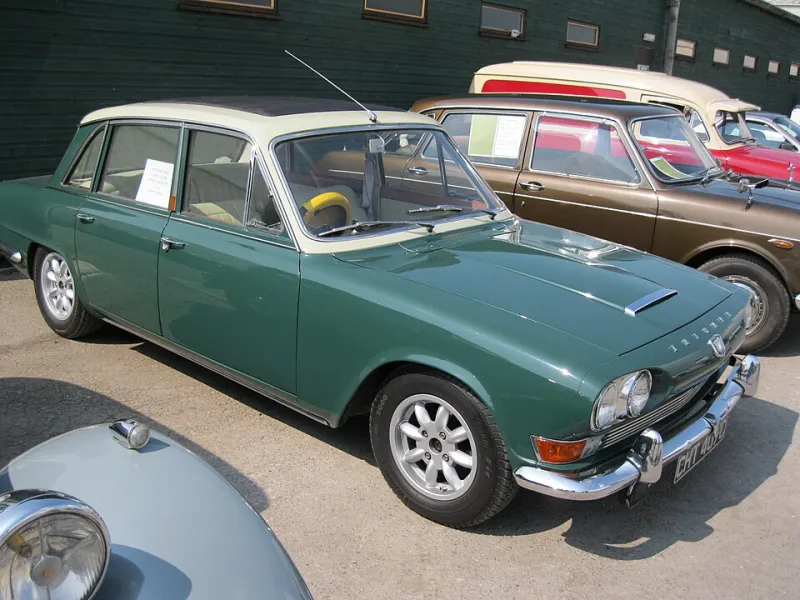
Photo: Andrew Bone from Weymouth, England, CC BY 2.0, via Wikimedia Commons
Four Minilites arriving together can feel like a set. They often share a seller, a layer of grime and the same general shape, so it is easy to assume they also share width, offset, centre bore and condition. That assumption is the matching myth. A real set is four wheels with compatible critical dimensions and a known history. A lookalike quartet is four wheels that happen to be the same colour.
Before the first nut is torqued, spend an afternoon auditing each wheel individually. It is a dull job compared with fitting them, but it is far cheaper than finding the odd one out through a braking wobble, an arch contact mark or an awkward conversation with your insurer.
Start with a clean sheet — literally
Give each wheel a reference: near-side front, off-side front, near-side rear, off-side rear, plus any spare. Clean the rim faces and inner barrels so markings and cracks are visible. Photograph each wheel from the front, back, inside barrel and around the stud holes. Keep the pictures with your service file. If you later sell the car or make an insurance claim, that record is worth more than a vague memory of where the wheels came from.
Make a simple card for each wheel and fill in what you can actually verify, not what the seller told you. The useful entries are diameter, width, offset, centre bore, stud pattern, date or casting marks, repair evidence and runout.
The five numbers that make a set
Diameter is the easy one: 10, 12, 13, 14 or 15 inch, depending on the car. Width is where things start to drift. Measure between the bead seats rather than across the outer flanges, because flange thickness varies. If the tyre is still fitted, look for a stamped width first; if there is no stamp and the measurement is borderline, have the tyre removed before you commit.
Offset, usually marked ET, decides how far the wheel sits in or out. You can check it with a straight edge across the inner mounting face and a ruler down to the bead seat. Compare backspace across all four wheels. A few millimetres can be a production tolerance; a clear step change is a warning. Centre bore matters just as much on a classic conversion. Measure the spigot recess with a caliper and check whether a spigot ring is present, missing or different on one wheel. Stud pattern is not just the number of holes — check the spacing and the condition of each hole.
Finally, look at the markings. Cast part numbers, date codes, brand stamps and machining marks are clues. Matching stamps do not guarantee matching specifications, but wildly different stamp styles on supposedly identical wheels deserve a second look.
Finding the odd one out
Weigh each wheel without its tyre if you can. A difference of a few hundred grams is not proof of anything, but a wheel that is noticeably heavier or lighter than its siblings is worth investigating. Compare the spoke shape, valve hole position, centre badge recess and the finish inside the barrel. Fresh powdercoat over old pitting can hide a repair, and a tidy outer face can disguise a bent inner flange.
Check runout with the wheel on a balancing machine or, at a push, with a fixed pointer and a careful spin. Look closely around the spoke roots and the hub for welding, porosity or cracks. Elongated stud holes, an enlarged centre bore or a heavily machined mounting face are all reasons to stop and think. A wheel that has been repaired in a structural area is not necessarily scrap, but it needs a proper verdict — not a quick rub-down and a new coat of paint.
What the mismatch does on the road
A mixed set can alter scrub radius, arch clearance and the load path through the hub and bearings. You may feel it as a pull under braking, a shimmy at motorway speed or uneven tyre wear. You may also see it as a shiny mark on an inner arch after a hard corner. None of those symptoms proves the wheels are mismatched, but a mismatched set makes all of them more likely.
MOT testers are not there to audit your wheel specification. A pass does not mean your Minilites are a matched set; it means the tester found no obvious unsafe condition on the day. Insurance is a separate matter. If you have declared a wheel upgrade, the underwriter expects the modification to be what you described. Four wheels with different offsets and widths are harder to describe honestly than one coherent set.
Pair, replace or retire
If one wheel is the odd one out, the safest route is usually to make a matched pair for the axle. That may mean buying one more wheel of the correct specification, or moving the odd wheel to the spare if it is dimensionally suitable. If the odd wheel has a different offset or width, do not put it on an axle with its lookalikes and hope for the best.
Retire a wheel from road use if it has a crack, a structural weld, an elongated stud hole, an oversized centre bore or runout that cannot be corrected. A damaged Minilite can still be a display piece, a garage ornament or a source of a centre badge. It should not be a road wheel simply because it matches the paint.
Keep the paperwork honest
Write down what you measured and what you decided. Note any pairings, replacements and repairs. Keep receipts for new wheels, tyres and any professional inspection. If you inherited the wheels with the car, say so in your own records rather than inventing a history. Four wheels with four histories can still become a usable set — but only after you have stopped pretending they were matched all along.