MOT Day Without the Myths: A Minilite Owner’s Reality Check
The test isn’t a concours judging sheet
Every autumn, the same conversations start in classic car groups. Someone’s car has failed on a wheel-related item, someone else insists Minilites are ‘automatically’ a problem, and a third person claims testers don’t even look at wheels. None of those positions is quite right.
An MOT is a roadworthiness check, not a restoration inspection. It is not there to decide whether your wheels are the correct period specification, whether the centre badges match the age of the car, or whether the finish is better than it left the factory. It is there to establish whether the vehicle meets the minimum safety and environmental standards required at the time of test. That distinction matters, because it tells you where to spend your preparation time.
As of November 2026, the DVSA MOT inspection manual remains the reference point for testers in England, Scotland and Wales. The manual is detailed, but it is not a secret document. Read the relevant sections on wheels, tyres and wheel bearings and you will quickly see that the emphasis is on condition, security and obvious safety defects. Your Minilites are not being marked on style.
What a tester is actually looking at
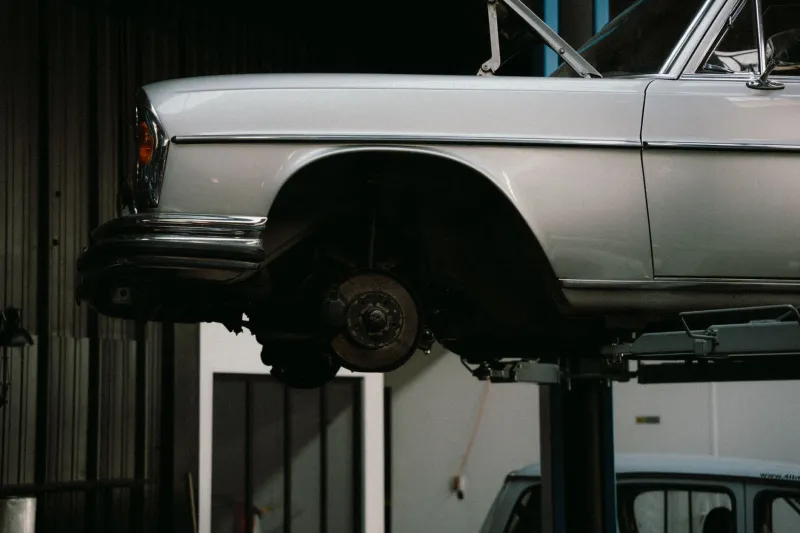
When the car goes over the pit or onto the ramps, the tester’s attention is on a few practical questions. Is each wheel secure? Is it damaged in a way that could affect safety? Are the tyres legal and in sound condition? Is there play in the wheel bearings? Do the wheels and tyres appear to foul anything or interfere with steering and braking?
That is the core of it. The tester is not usually removing wheels to inspect the inner faces, and they are not stripping tyres off rims. They are working with what can be seen, felt and heard. A clean wheel helps them see defects. A wheel caked in mud and old underseal makes everyone’s job harder, but the test is still about safety, not presentation.
Corrosion: surface bloom versus structural worry
Alloy wheels do not rust like steel, but they can corrode. White bloom around the bead area, bubbling under paint, or dark pitting on the rim edge is common on older Minilites that have seen British winters. The question is whether that corrosion has gone far enough to affect strength, sealing or wheel security.
A tester is likely to be concerned by corrosion that has clearly reduced the section of the wheel, cracked the rim, or left the bead seat in poor condition. Light surface oxidation is a different matter. It is ugly, and it is worth addressing, but it is not automatically an MOT failure. If you are unsure, clean the area and look closely. If a wire brush reveals deep pits or a crack, deal with it before test day rather than hoping it passes unnoticed.
Cracks and repairs
Cracks are the clear red flag. A cracked alloy wheel is not a cosmetic issue, and a tester who spots one is unlikely to wave it through. The same applies to repairs that look structural or improvised. Welding up a cracked alloy rim is not the same as repairing a steel wheel, and the MOT manual takes a dim view of wheels that have been repaired in a way that could compromise safety.
This is where secondhand Minilites deserve a proper look before they go on the car. The autojumble bargain with a fresh coat of paint can hide a lot. Check the bead edges, the spoke roots and the mounting face. If a wheel has been badly kerbed and then painted over, the damage may still be visible from the inside. A few minutes with a torch is cheaper than a failed test and a new wheel.
Spacers, offset and clearance
Spacers are not banned by the MOT, and a well-engineered spacer setup is not an automatic failure. What matters is the result. If a spacer leaves the wheel insecure, if the studs or bolts do not engage properly, if the wheel fouls the suspension or bodywork, or if the tyre rubs under steering or suspension travel, that becomes a safety issue.
Testers are also alert to obvious tyre fouling and to wheels that sit oddly in the arches. They are not measuring your offset with a caliper, and they are not checking whether your Minilites are the exact width listed in a period catalogue. But if the car looks like it is sitting on the bump stops with the tyres hard against the inner wing, expect questions. Fitment guides are useful for owners, but the MOT is interested in whether the car is safe on the road, not whether it matches a forum build thread.
Wheel bearings and play
Wheel bearing condition is part of the wider inspection, and it is one of the areas where tired classics can surprise their owners. A worn bearing may show up as play at the wheel, a roughness felt when the wheel is rotated, or a noise that changes with speed. Testers will rock the wheel and listen. If there is excessive play, it needs attention.
Minilites themselves do not cause wheel bearing wear, but wider wheels and stickier tyres can put more load through older hubs and bearings. If you have changed wheel size or offset, it is worth checking bearing play as part of your pre-MOT routine. It is also worth checking wheel nut torque after any recent wheel change. Loose wheels are not a grey area.
A sensible pre-test check you can do at home
Give the car a proper look a week before the test, not the night before. Wash the wheels so you can see the surfaces. Check each tyre for tread depth, cracking, bulging and embedded objects. Look at the rim edges for dents and cracks. Check that every wheel nut or bolt is present and correctly torqued. Rock each wheel with the car jacked safely and feel for play. Look for signs of rubbing on the inner arches and suspension. If you run spacers, confirm the stud engagement and check that nothing has worked loose.
This is not about trying to second-guess the tester. It is about catching the obvious things while you still have time to fix them properly. A classic that is MOT-exempt can still benefit from a voluntary test, and a car that is tested annually deserves the same courtesy.
What the test is not
An MOT will not tell you whether your Minilites are genuine, whether the centre caps are correct for the year, or whether the wheels would win a concours award. It will not certify that your fitment is period-perfect. It is a snapshot of roadworthiness on the day.
That is actually liberating. You do not need to turn MOT preparation into a full wheel restoration. You need to make sure the wheels are sound, secure and safe, with legal tyres and no obvious fouling. Do that, and test day is far less dramatic than the internet would have you believe.