Thirteen-Inch Rubber in 2026: Picking Minilite Widths Before the Shelf Shrinks
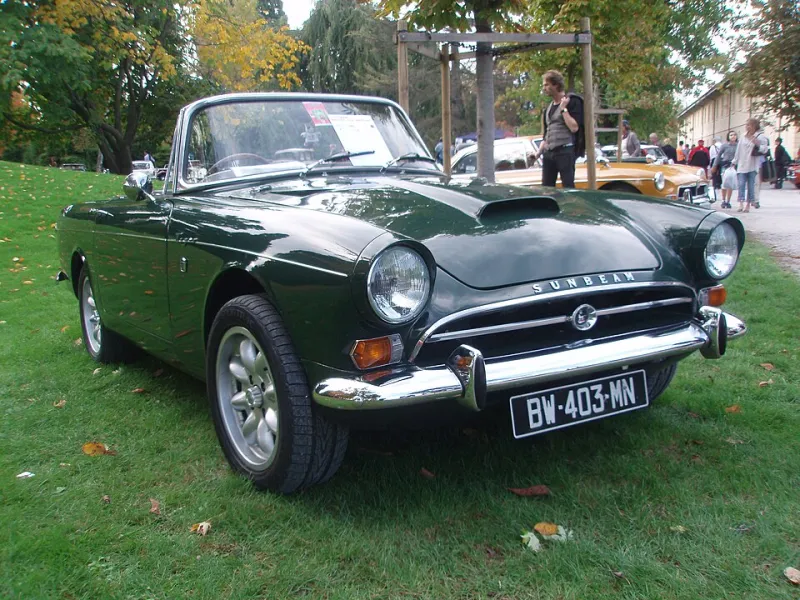
Photo: Akela NDE (talk), CC BY-SA 2.0 fr, via Wikimedia Commons
If you have tried to order a set of 13-inch tyres lately, you will know the feeling. The page says the size exists, the stock number says otherwise, and the delivery estimate has the cheek to say “late next month”. For Minilite owners, this is not just a mild annoyance. The rim width you choose — 5J, 5.5J or 6J — quietly decides which tyre sizes you can actually buy in 2026, and how much choice you will have when the next set is due.
This is not a doom-and-gloom piece. Plenty of 13-inch rubber is still out there, and some of it is very good. But the market has been thinning for years, and the sensible approach now is to think about tyre supply before you fall in love with a particular rim width.
Rim width is not the same as tyre width
A Minilite marked 5J has a 5-inch nominal rim width. The “J” describes the flange profile, not the tyre size. A 5J wheel will usually sit happily with a 145-section tyre and can often take a 155 or 165 depending on the manufacturer’s recommendations. A 5.5J opens the door to wider options, and a 6J is the more committed choice for cars running 185-section rubber or bigger.
That is the theory. In practice, the tyre has to exist in a size that suits your car’s arches, your suspension and your speedometer. A width that looks great in a catalogue is no use if the only tyre that fits it is a £30 unknown brand with the grip of a wet biscuit.
Which 13-inch sizes still make sense?
For classic Minilite applications, the usual suspects remain 145/80R13, 155/80R13, 165/70R13, 175/70R13, 185/60R13 and 205/60R13. Availability moves around, so check before committing. The 155/80R13 and 165/70R13 sizes have long been the bread-and-butter choices for small classics, while 175/70R13 and 185/60R13 suit cars that need a bit more footprint without going silly.
A 5J rim is a natural home for 145/80R13 or 155/80R13. A 5.5J is often the sweet spot for 165/70R13 or 175/70R13, and can work with 185/60R13 on the right car. A 6J rim generally wants 185/60R13 or 205/60R13, though you must check the tyre maker’s approved rim range rather than guessing from the sidewall.
Quality brands still list classic-friendly 13-inch sizes — names like Vredestein, Michelin, Pirelli and Dunlop have long histories in this corner of the market, and there are credible modern options too. The point is not to name-drop. The point is that a known brand with proper wet grip and consistent construction is worth more than a bargain bin mystery tyre, especially on a light classic that relies on its tyres for steering feel as much as grip.
Rolling radius: the quiet troublemaker
Mixing tyre sizes across an axle is never clever, but on a classic it can be genuinely irritating. A 155/80R13 and a 165/70R13 do not have the same rolling radius, even though both are 13-inch tyres. Fit one of each on the same axle and you can get odd handling, inaccurate speed readings and unnecessary heat. On cars with a limited-slip diff, mismatched rolling radii are even less welcome.
If you are changing from a standard size to something wider, work out the overall diameter and compare it with the original. A small difference is usually tolerable; a big jump changes gearing, speedometer accuracy and arch clearance. Your spare matters too. A 145/80R13 spare in the boot is fine as an emergency get-you-home, but it should not become a permanent fifth wheel with a different circumference from the rest.
The 5J, 5.5J and 6J decision
If you want the widest future choice, 5.5J is often the pragmatic pick. It can take a range of 13-inch sizes without forcing you into a narrow tyre or an expensive wide one. A 5J is brilliant for originality and small-capacity cars, but it limits you to narrower rubber. A 6J looks purposeful and suits wider arches, but it narrows your tyre options and makes arch clearance more critical.
There is no universal answer. A Hillman Imp, a Mini and an MGB all want different things. What matters is choosing a width that matches the tyre sizes you can genuinely buy, not the ones you wish were still on the shelf.
Insurance and the paper trail
In the UK, declaring non-standard wheel and tyre sizes to your insurer is not optional paperwork. If the car left the factory on steel wheels and you have fitted Minilites with a different width or tyre size, tell them. Keep the receipts, the wheel specification and the tyre sizes. If you have changed the rolling radius significantly, be prepared to explain it. This is not about being paranoid; it is about avoiding a claim-time argument.
An MOT tester is unlikely to fail a car simply for wearing Minilites, but that does not make the modification invisible. Sensible records are your friend.
Buy well now, not desperately later
If you know you will need tyres in the next year or two, buying a known quality brand now may beat chasing a bargain later when the only remaining stock is an oddball size. Tyres age, so do not hoard them indefinitely, but a matched set of good 13-inch rubber is a better investment than a set of cheap tyres you will regret on the first damp roundabout.
Check the date codes, buy in matched pairs at minimum, and store them properly if you are not fitting them straight away. Minilites deserve better than whatever is left at the back of the shed.
A quick checklist before you order
- Confirm the tyre maker’s approved rim width for your chosen size.
- Compare the new tyre’s overall diameter with your current set.
- Keep front and rear axle pairs matched.
- Check arch clearance on full lock and under compression.
- Tell your insurer about non-standard wheel and tyre sizes.
- Buy a quality brand you recognise, not just the cheapest listing.
The 13-inch tyre market is narrower than it was, but it has not vanished. With a bit of forethought, your Minilites can stay properly shod — and you can spend less time refreshing out-of-stock pages and more time driving.