The Honest Speedometer Test: Gearing Fallout From a Minilite and Tyre Change
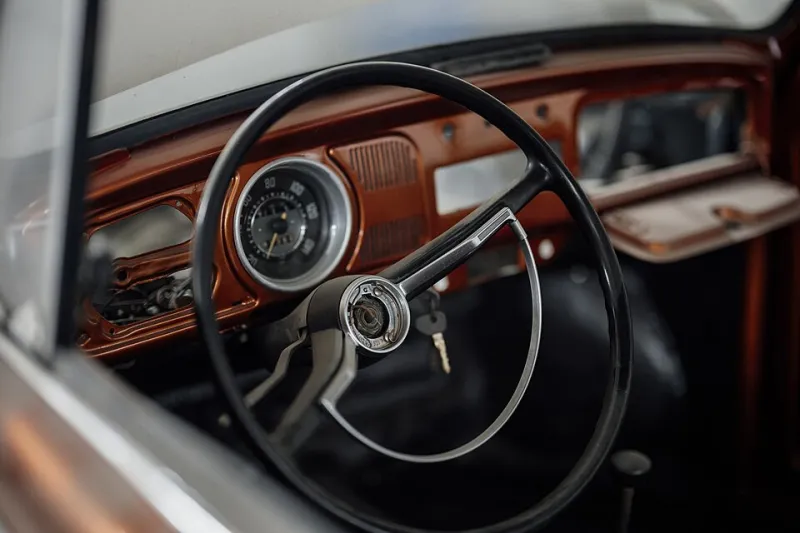
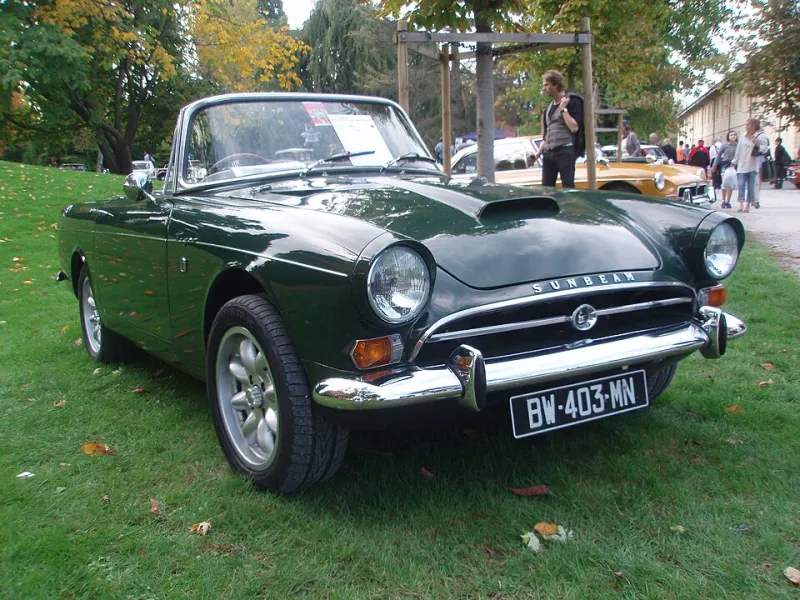
Photo: Shixart1985, CC BY 2.0, via Wikimedia Commons
A Minilite swap usually starts with the right questions: will they clear the arches, will the offset sit where it should, and will the nuts and spigot rings behave? All sensible. But there is a quieter specification buried in the same decision. The overall diameter of the wheel and tyre together decides how far the car travels for every turn of the road wheel. Change that, and you have changed the gearing. The speedometer may not mention it, but it will show up.
The wheel is only half the equation
It is easy to think of a 13-inch Minilite as a 13-inch Minilite and leave it there. The rim diameter is fixed, but the tyre sidewall is not. A 155/80R13 and a 175/60R13 both fit a 13-inch rim, yet they do not roll the same distance. The first has a tall, compliant sidewall; the second has a short one. The overall diameter — and therefore the rolling circumference — is what the gearbox, speedometer and odometer actually feel.
That matters on a classic because the original equipment tyre was part of the original gearing. Fit a wider Minilite with a lower-profile tyre and you may keep the same rim size while shrinking the overall diameter. Go up a rim diameter and choose carefully, and you may end up close to the original. The number on the sidewall is not the number that matters; the combination is.
The arithmetic, without the drama
You do not need a engineering degree to get a useful answer. Work in millimetres.
- Sidewall height = tyre width × aspect ratio ÷ 100.
- Overall diameter = rim diameter in inches × 25.4 + two sidewall heights.
- Rolling circumference = overall diameter × π.
Take a Spitfire-style 155/80R13. The sidewall is 155 × 80 ÷ 100 = 124 mm. The rim is 13 × 25.4 = 330.2 mm. Overall diameter is 330.2 + 248 = 578.2 mm. Circumference is about 1,816 mm.
Now a 175/60R13. Sidewall is 105 mm, overall diameter is 330.2 + 210 = 540.2 mm, and circumference is about 1,697 mm. That is roughly 6.5% smaller. Same rim diameter, very different gearing. The car will feel livelier, the engine will rev harder at a given road speed, and the speedometer will over-read by a noticeable margin.
Go the other way and the opposite happens. A taller package raises the gearing, drops the cruising revs and makes the speedometer under-read. That last point is the one to treat seriously in the UK.
What it does on the road
A smaller rolling circumference lowers the effective gearing. Acceleration improves because the engine is working against less distance per revolution, but top speed in each gear falls and cruising becomes busier. A larger circumference does the reverse: longer legs, calmer motorway revs, but a lazy feel away from the lights and more clutch slip if the change is severe.
The speedometer and odometer are caught in the same arithmetic. Most classic speedometers are driven from the gearbox and calibrated for a specific number of turns per mile. If the tyre now turns more times per mile, the speedometer reads high and the odometer clocks up distance faster than reality. If it turns fewer times, the speedometer reads low and the odometer under-records. Neither is a cosmetic issue when you are trying to keep an eye on limits, servicing intervals or fuel consumption.
There is a subtler effect too: unsprung weight and inertia. A heavier Minilite and tyre package can take the edge off ride quality and acceleration even when the circumference is correct. Lightness is not everything, but it belongs in the same conversation as gearing.
Speedometer law and MOT realities
In the UK, a speedometer must not under-read. Over-reading is permitted within the construction and use limits, but a speedometer that tells you you are doing 60 mph when you are actually doing 67 mph is not a happy arrangement. The MOT test is not a speedometer accuracy clinic, so a car can pass an MOT with a speedometer that is optimistic or pessimistic. That does not make the reading correct, and it does not remove the need to tell your insurer about a modified wheel and tyre specification.
Be wary of treating a phone GPS reading as gospel. It is a useful cross-check on a straight, steady run, but it has its own lag and accuracy limits. The calculated circumference is the better starting point; the GPS is a sanity check, not a calibration certificate.
Doing the homework before you buy
Before ordering a set, measure what you have. Record the current tyre size, rim width and offset, and the actual rolling circumference if you can — a chalk mark on the tyre and the ground, rolled forward one revolution, is old-school but effective. Then calculate the candidate package and compare the two figures as a percentage.
A change of 1–2% is usually liveable. Beyond 3–4%, you should be thinking about speedometer correction. Some classic gearboxes offer speedo drive pinions in different tooth counts; others need an in-line corrector or a specialist rebuild of the speedometer. Factor that into the cost before you fall in love with a photograph of a Minilite.
Also check tyre availability in the size you are considering. The 13-inch performance tyre market is not what it was, and a size that looks perfect on paper may be awkward to replace in a few years. A fitment guide is not just about arches and offset; it is about what you can actually buy when a tyre is damaged.
The package, not the wheel
The right-looking Minilite can still be the wrong gearing choice. Treat the wheel and tyre as one specification, calculate the rolling circumference, decide whether you want standard gearing or a deliberate change, and correct the speedometer if the numbers say so. That way the car looks right, drives as intended, and the instrument in front of you is telling something close to the truth.