The Wet-Weather Width Question: Why a Wider Minilite Isn’t Automatically Safer in the Rain
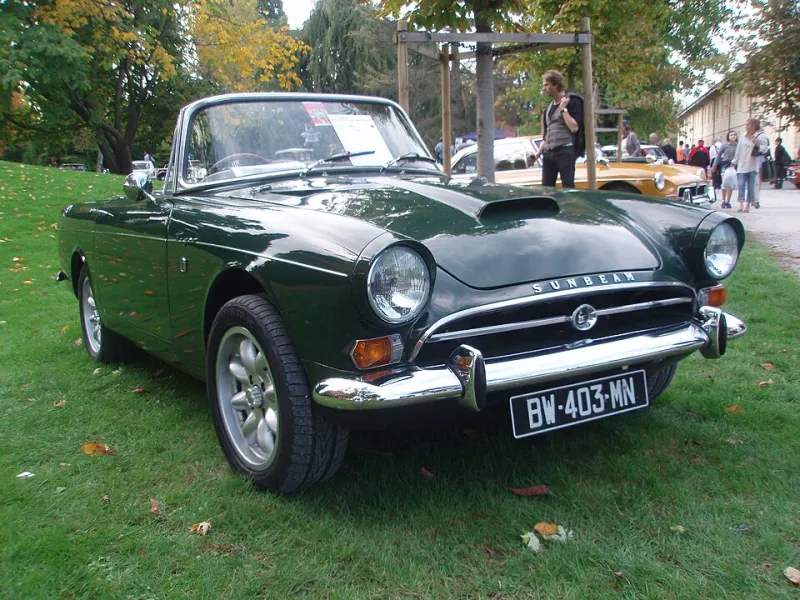
Photo: Akela NDE (talk), CC BY-SA 2.0 fr, via Wikimedia Commons
There’s a familiar scene at any UK classic gathering when the heavens open. Someone reports that their car feels vague, twitchy or keen to follow every lorry rut, and the conversation turns to tyre brands. A different make of rubber is proposed, then a different tread pattern, then perhaps a different set of wheels altogether. What often gets overlooked is the rim underneath the tyre. On a Minilite-shod classic, wet-weather behaviour is not just a tyre story. It is a width, section and sidewall story too.
That is not an argument against wide Minilites. They look right, they can sharpen dry-road response and they suit plenty of fast-road builds. But if the car is used through a proper British autumn and winter, the default assumption that wider is safer in the wet deserves a closer look. Sometimes it is the opposite.
The contact patch is not a rain tyre
A wider wheel and tyre package puts more rubber on the road in the dry. That sounds like a good thing until you remember what rain does. Water has to go somewhere. A tyre clears it through its tread grooves, and the faster the car is moving, the harder that job becomes. A broader contact patch can increase the volume of water the tyre has to shift before it reaches the road surface. If the tread pattern is not especially open, or the tyre is old and hard, the limit arrives sooner.
A narrower tyre, by contrast, presents a smaller footprint. It can cut through standing water rather than trying to sweep it aside. That is why winter tyres and many everyday cars use relatively modest sections. It is also why a classic on 165-section rubber can sometimes feel more secure in torrential rain than a modified car on much wider tyres, even when the wider car has more expensive rubber fitted.
The catch is that narrower is not automatically better either. Too narrow a tyre on too wide a Minilite can stretch the sidewall, reduce compliance and create a nervous, skittish feel. The useful question is not simply how wide, but how well matched the rim and tyre are.
Wide rim, stretched sidewall, mixed messages
Minilite widths are usually quoted in inches, with a J suffix. A 5J rim is narrower than a 6J, and the difference changes how a given tyre sits. Put a 165-section tyre on a modest rim and the sidewall stands relatively upright. Put the same tyre on a wider rim and the sidewall is pulled outwards. The tread may flatten, steering response may sharpen and the car may feel more immediate on a dry road. In the wet, that same combination can feel less forgiving.
Sidewall shape affects more than looks. It influences how the tyre absorbs bumps, how it communicates grip loss and how progressively it lets go. A very stiff, stretched sidewall can make a car feel precise right up to the point where it suddenly isn’t. On a damp B-road with camber changes, patch repairs and muddy edges, that lack of warning is not a virtue.
There is also the matter of rim protection and kerb damage. A wide Minilite with a stretched tyre leaves the rim lip exposed. In a British lane, with hedges close on one side and a tractor coming the other way, that is a practical concern as well as a cosmetic one.
What British roads actually ask of a Minilite
The UK does not offer a single wet-weather test. It offers a mixture: motorway standing water, greasy town centres, leaf-covered lanes, worn-out farm roads and steep cambered corners. A wheel and tyre package that feels planted on a warm, dry track day may feel quite different on a cold, wet morning in the Cotswolds or the Pennines.
For a classic used mainly on dry weekends, a wider Minilite can be a sensible choice. For a car that sees real miles in all weathers, the priorities shift. You want a tyre that can evacuate water, a sidewall that gives some warning, and a rim width that supports the tyre rather than over-stretching it. You also want enough compliance to keep the contact patch planted over poor surfaces.
That is why the same Minilite width is not right for every owner. A 5J rim with a well-matched 165-section tyre may suit a light classic beautifully. A heavier car with more power might need more width and a different section. The mistake is choosing the width first and treating the tyre as an afterthought.
A practical width shortlist
Start with the manufacturer’s original wheel and tyre specification, then work outwards. If the car was designed around a modest section, moving up one rim width is usually more sensible than jumping two. Check that the chosen tyre is approved for the rim width. A tyre fitter can confirm this, and the tyre maker’s data is the final word.
On a classic Mini, for example, ten-inch Minilites in a sensible width with a matched section will often feel more resolved in the rain than a very wide package that fills the arches but compromises steering feel. On an MGB or similar, a 5J to 5.5J Minilite with a period-appropriate section is often a better wet-road starting point than the widest rim that will physically fit. The exact numbers depend on the car, the arch clearance and the suspension, but the principle holds: support the tyre, don’t stretch it for appearance alone.
Also consider tyre age. A five-year-old tyre with plenty of tread can still be poor in the wet because the compound has hardened. Checking the date code matters as much as checking the width.
Steering feel and the confidence factor
Wet grip is not only about the moment of aquaplaning. It is also about how much confidence the car gives before that moment. A narrower, softer-sidewall package may roll slightly more, but it often tells the driver what is happening. A wide, stiff package may feel sharper at low speed yet less communicative when grip is low.
That is why blame is often misdirected. An owner fits a wider Minilite, notices the car is less pleasant in the rain and blames the tyre brand. The real issue may be the rim width, the section, the sidewall shape or the tyre pressure. It may also be alignment. Lots of camber and toe can make a car feel darty in the wet, especially with a wide footprint.
Test in the wet, not just the dry
Before committing to a Minilite width, drive the car in the rain if you can. Find a quiet, safe stretch of road with standing water and see how the steering feels. Check for tramlining, vague turn-in and sudden loss of grip. Adjust pressures to the handbook or tyre maker’s recommendation for load, not to a number remembered from a forum. If the car still feels wrong, revisit the width and section before spending money on different rubber.
The rain does not care how good the wheels look. It cares about how the tyre meets the road. Choose a Minilite width that gives the tyre a fair chance to do its job, and British weather will feel a lot less like a conspiracy.