Mud, Cash and a Straight Edge: Sizing Up Second-Hand Minilites at the Autojumble

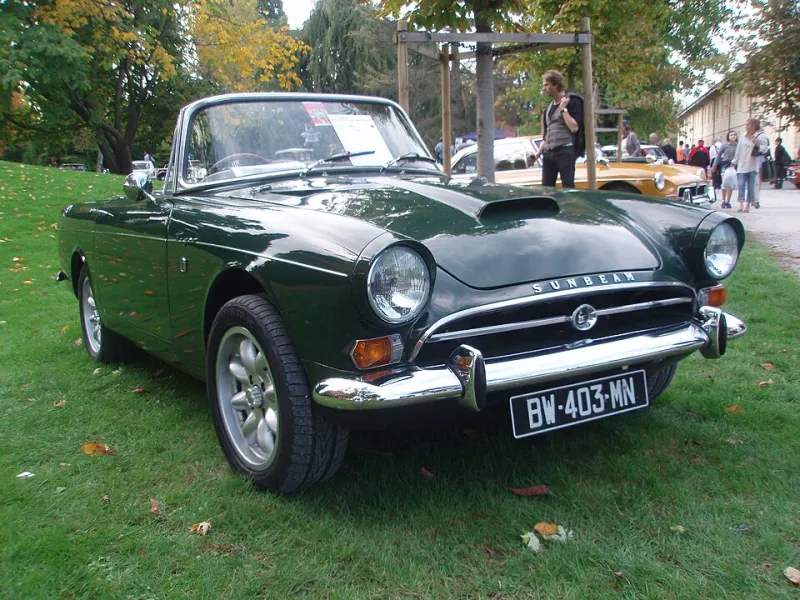
Photo: Calreyn88, CC BY-SA 4.0, via Wikimedia Commons
Autojumbles are wonderful places. You go in looking for a spare centre cap and come out with a steering wheel, a tin of ancient wax and a set of Minilites that the seller swears came off a rally car. Sometimes that story is true. Sometimes the wheels are a matched set of four different sizes with stud holes like teardrops. The difference between a good buy and an expensive pile of rims is usually twenty minutes of sensible checking, done before you start haggling.
Pack Like You Mean It
A autojumble is not a showroom. The ground is uneven, the light is either flat grey or lashing rain, and the seller is already thinking about the burger van. Before you leave home, put a few things in the boot: a steel straight edge about 600mm long, a small torch, a magnifying glass, a vernier caliper, a notebook and your phone for photographs. A rag is useful. Disposable gloves are useful. A small sheet of MDF or a clean board is genuinely useful if you want to check a wheel for runout without fighting the grass.
Do not bring a cheque book and a hopeful heart. Bring cash, but keep it in a separate pocket from your wallet. The first rule of autojumble buying is that the money you have already handed over is the money you cannot use to walk away.
Stamps: The Wheel's Birth Certificate
Start at the hub face and the area around the valve hole. Period Minilites and later reproductions carry different marks, and not every wheel has a date code. What you are looking for is consistency. Check the size marking on all four wheels. A set of 5.5J x 13 should not contain a 6J x 13 unless the seller has told you and the price reflects it. Check the offset marking if there is one. Check any manufacturer or foundry marks.
Photograph every stamp you can find. If the seller has a story about the wheels coming off a particular car, write down the details. A story is not paperwork, but it is a starting point. What you are really doing is building a record of what you have seen, because in a muddy field your memory will be worse than you think.
The Straight-Edge Test
A wheel can look round and still be bent. Lay the wheel flat on your board, or hold it steady against a clean flat surface, and put the straight edge across the rim flange. Look for gaps that change as you rotate the wheel. A small gap is normal; a gap that opens and closes by a couple of millimetres is a bend. Repeat across the other diameter.
Check the outer lip for kerbing and flat spots. A light scuff is cosmetic. A flattened section is a wheel that has met a kerb hard. Also look at the inner barrel for dents and hammer marks. A wheel that has been straightened can still be usable, but you need to know that is what you are buying. Ask directly: has this wheel been repaired? A seller who says yes and explains the repair is worth listening to. A seller who says no while the paint is fresh over a welded spoke root is not.
Stud Holes and the Ghost of Overtorque
This is where a lot of second-hand Minilites fall down. Look closely at each stud hole. The countersink should be even and circular. If the hole is oval, elongated or has a raised lip around it, the wheel has been run with loose nuts or overtightened. Cracks can radiate out from the hole. Check with the torch and the magnifying glass.
Look at the seating face where the nut or washer sits. Heavy witness marks are normal on an old wheel. Deep gouges or a chewed surface are not. If the stud holes are badly worn, budget for a proper repair or walk away. Do not convince yourself that a set of new nuts will fix a hole that has lost its shape.
Paint, Powder and What It Hides
Fresh powder coat is not a crime. Lots of owners refurbish wheels properly. But a thick new finish can hide cracks, weld repairs and corrosion. Look for colour mismatch between wheels, sanding marks under the paint, and any sign that the wheel has been blasted within an inch of its life. Check the bead seat area carefully. Tyre fitters can do damage there, and corrosion likes to start where the tyre sits.
The magnet test is not much help on an alloy wheel, but a small magnet can sometimes reveal steel inserts or repairs. Do not rely on it. Your eyes and a torch are better tools.
The Negotiation
Once you have found faults, use them. A bent wheel, a mismatched size, a chewed stud hole and a missing centre cap are all negotiation points. Be polite and specific. 'This one has a bend in the outer lip and the stud holes on that one are oval' is more useful than 'these look rough'. If the seller will not move, and the faults matter to you, walk away. There will be another autojumble.
Ask whether the wheels have been used on the road recently, and whether they held air. Ask what car they came off. Ask if there are any centre caps or nuts included. A set with the right nuts and caps is worth more than a bare set that will cost you another fifty pounds to complete.
The Handshake
A handshake in a muddy field is not a warranty. If the seller is willing to give you a phone number and a name, take it. If they are not, factor that into the price. Load the wheels, check you have all four, and get them home. Then, before you fit them, do the checks again in good light. The field is where you decide whether to buy. The workshop is where you decide whether to use.
Second-hand Minilites can be one of the best value routes into a proper set of wheels. They can also be a crash course in why patience pays. Take the straight edge. Take the torch. Take your time.